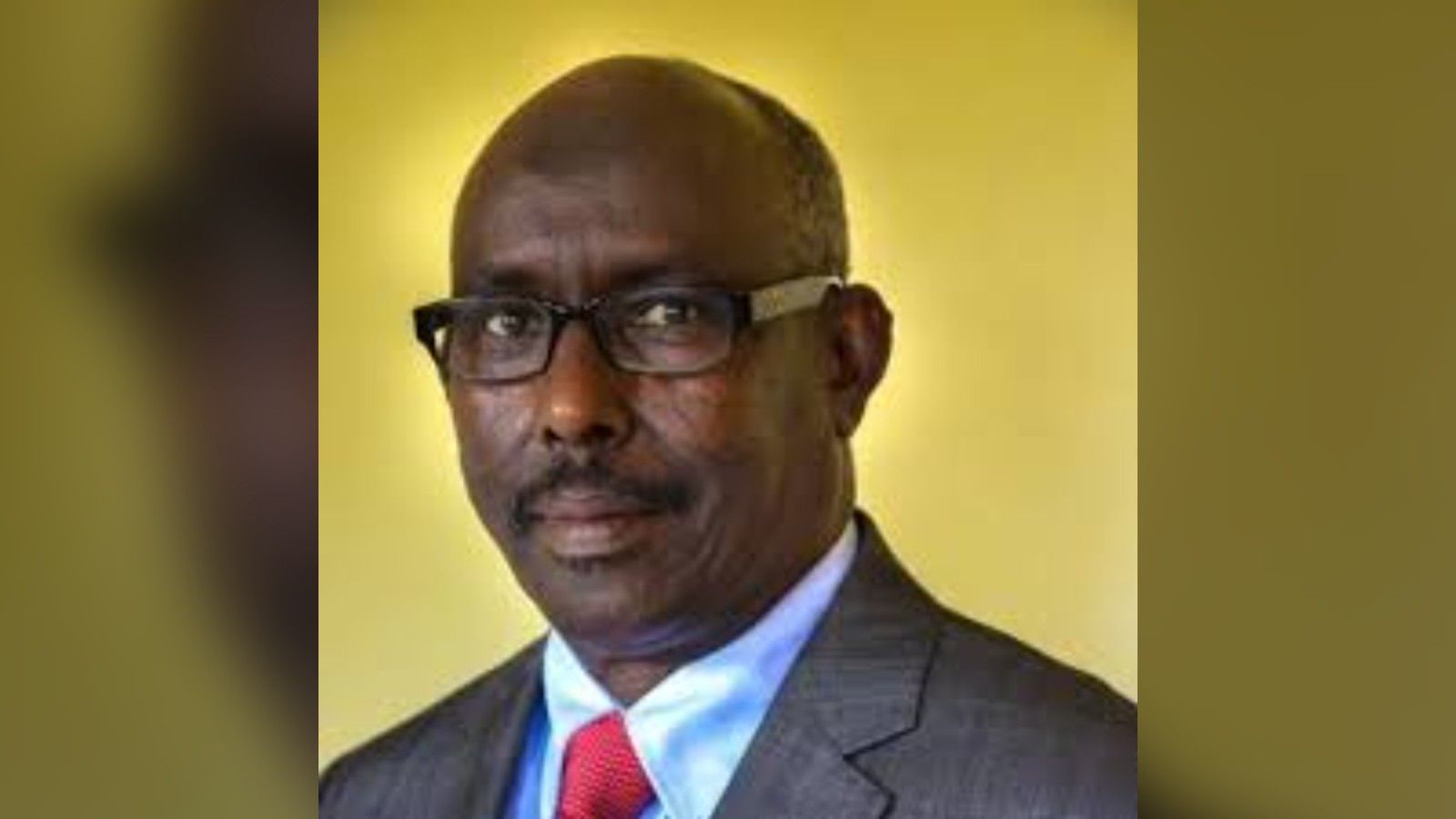
Sawir: Ladnaan Media
Repeated fruitless meetings before and after the expiration of the presidential and parliamentary mandates, including those facilitated by members of the international community—the US, UK, EU, UN, and Turkey—have served largely as photo opportunities and propaganda victories, enabling HSM to perpetuate his illegitimate authority.
Meanwhile, HSM has rejected the Supreme Court’s ruling affirming the expiration of the mandates of the elected federal institutions and ordering elections within 90 days; unlawfully dismissed the Chief Justice and Supreme Court judges responsible for the ruling; unlawfully appointed a new Chief Justice; and installed authorities in Southwest, Hirshabelle, and Galmudug, all now engulfed in political and security crises.
These developments have been compounded by:
I. The Electoral Commission’s unilateral announcement of federal elections for April and May 2027.
II. A military attack that endangered the lives of former President Sheikh Sharif Sheikh Ahmed and former Prime Minister Hassan Ali Khaire.
III. The violent suppression of public demonstrations.
IV. Continuing intimidation and threats against opposition leaders.
The Opposition’s Essential Preconditions for Negotiations
Against this background, the opposition has identified the following measures as essential for meaningful political negotiations:
1. International mediation to facilitate negotiations and guarantee the fair and timely implementation of agreed protocols and processes.
2. Immediate dissolution of the Federal Electoral Commission.
3. Selection of a safe, secure, and politically neutral venue for negotiations.
4. Formal acknowledgment that the mandates of the Federal Parliament and the President expired on April 14 and May 15, 2026, respectively.
5. Acceptance and implementation of the Supreme Court’s ruling of November 5, 2026, and reinstatement of the unlawfully dismissed Chief Justice and Supreme Court judges.
6. Limiting participation in the negotiations to HSM as the representative of the Federal Government, the opposition members of the Council of Somalia’s Future, and former President Mohamed Abdullahi Farmajo. The participation of the unlawfully installed authorities in Southwest, Galmudug, and Hirshabelle would poison the negotiations and is therefore objectionable. The status and representation of the Northeastern State require further determination.
7. Acceptance of the 2012 Provisional Federal Constitution as the basis for political negotiations.
8. A formal declaration of cessation of hostilities between Federal Government forces and resistance forces in Southwest and Hirshabelle federal member states.
These measures are indispensable to achieving a comprehensive political settlement that restores constitutional governance, advances national reconciliation and unity, and defuses the political and social conflicts undermining Somalia’s security, stability, and international relations. They would also establish an important precedent for respecting constitutional term limits.
HSM’s Three Latest Political Maneuvers
Despite being fully aware of the gravity of Somalia’s political deadlock, economic strains, and security crises, and the measures necessary for a credible and expeditious resolution, HSM has instead resorted to three deceptive political maneuvers.
First, he dispatched the heads of the Somali National Army, Federal Police, and intelligence agency, accompanied by the President of the Military Court, to impress upon the opposition the gravity of the security situation and pressure them into accepting his invitation to dialogue without prior arrangements or guarantees. The opposition rejected this approach.
Second, HSM approached an individual opposition leader, asking him to host a meeting between HSM and the opposition at his private residence. The initiative nearly created a rift within the opposition, raising suspicions of possible political inducements. Ultimately, the opposition rejected the proposal and preserved its unity.
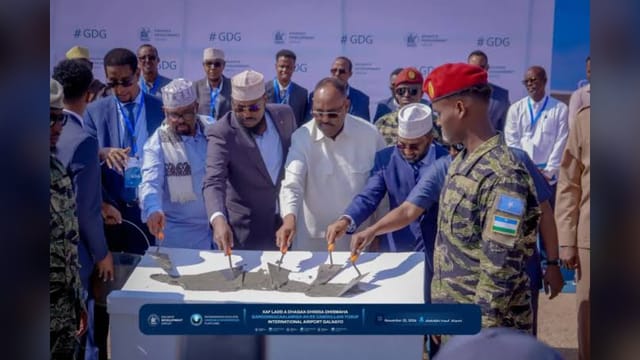
Third, following these failures, HSM used a public event marking the construction of a new naval base to portray himself as a conciliatory leader and the opposition as an obstacle to reconciliation and peace. He claimed that the opposition had rejected both his invitation to Villa Somalia and his offer to meet at their residences—gestures that lacked the good faith necessary to resolve a crisis of his own making.
During the same speech, HSM made two politically divisive and preemptive declarations: first, that the opposition would bear responsibility for whatever losses Somalia might suffer from the absence of a political agreement; and second, that he would never accept negotiations outside Somalia.
HSM drew this line in the sand just two days before meeting President Yoweri Museveni, who was intervening on behalf of the international community to facilitate negotiations between HSM and the opposition to resolve the political deadlock.
The Museveni Intervention and the Question of Venue
HSM met President Museveni on November 23, 2026, at State House in Entebbe, Uganda. Unfortunately, the information, photographs, and public statements emerging from the meeting offer little grounds for optimism.
President Museveni’s post on X (formerly Twitter) and his subsequent meetings with US diplomats in Uganda concerning Somalia offered no clear indication of a political breakthrough. Meanwhile, Villa Somalia publicized a vaguely worded and tangential joint communiqué that failed to address Somalia’s unfolding crisis.
Unconfirmed reports suggest that HSM accepted international mediation on condition that negotiations take place inside Somalia. He also reportedly invited President Museveni to visit Somalia, an invitation the latter accepted without setting a date.
If confirmed, HSM’s seemingly conciliatory concession would constitute a significant obstacle, jeopardizing the integrity and success of the negotiations from the outset for several reasons:
* Somalia’s prevailing political turmoil and armed conflicts make the domestic environment unsuitable for secure, open, and constructive negotiations.
* President Museveni and other senior international mediators are unlikely to remain in Somalia for the extended period required for substantive negotiations.
* HSM could exploit his role as host to project presidential legitimacy and political superiority despite the expiration of his constitutional mandate and the need for equality among negotiating parties.
* Opposition leaders continue to face intimidation, threats, and safety risks from security forces unlawfully controlled by HSM—forces whose conduct is neither constrained by the rule of law nor guided by respect for the rights of his political opponents.
* HSM’s history of political equivocation—his readiness to shift positions according to his personal political interests—undermines confidence in his commitments.
* The competing interests and interference of foreign powers embedded within Somalia’s fragile security environment risk compromising the safety, freedom, and integrity of the negotiations. A neutral foreign host country with established diplomatic protocols and professional security services could provide stronger safeguards against infiltration and interference.
The fundamental question, therefore, is not whether holding negotiations inside Somalia symbolizes national sovereignty or enhances national prestige, but which venue offers the best prospects for impartial and effective mediation, meaningful dialogue, credible guarantees, and a timely political settlement without subsequent disputes and recriminations.
Conclusion
The choice of venue must serve the resolution of Somalia’s crisis rather than allow HSM to invoke false patriotism and presidential prestige to perpetuate his personal rule.
HSM’s conduct suggests that retaining power takes precedence over addressing Somalia’s deteriorating condition. Pressuring the opposition to abandon essential preconditions merely to accommodate HSM’s ego and political manipulation or claim incremental diplomatic progress would be a grave and unwarranted mistake. His delaying tactics and political equivocation must be confronted from the outset.
It is hoped that President Museveni, the international community, and the Somali opposition will recognize the danger inherent in HSM’s reported conditional acceptance of international mediation. Such a seemingly conciliatory gesture risks prolonging his illegitimate grip on power rather than facilitating good-faith negotiations. Trust in HSM’s leadership has long been compromised beyond recovery.
Somalia needs a credible political settlement, not another political spectacle designed to portray the opposition as obstinate and intransigent while disguising the perpetuation of illegitimate authority as diplomatic progress.
Dr. Mohamud Uluso