Photo: Ladnaan Media
Turkey, one of Somalia's closest friends and a country with major agreements in the Somali Republic, has begun to position itself as neutral in Somalia's political dispute. In our assessment, this amounts to turning its back on President Hassan Sheikh Mohamud, whose mandate the opposition says has expired.
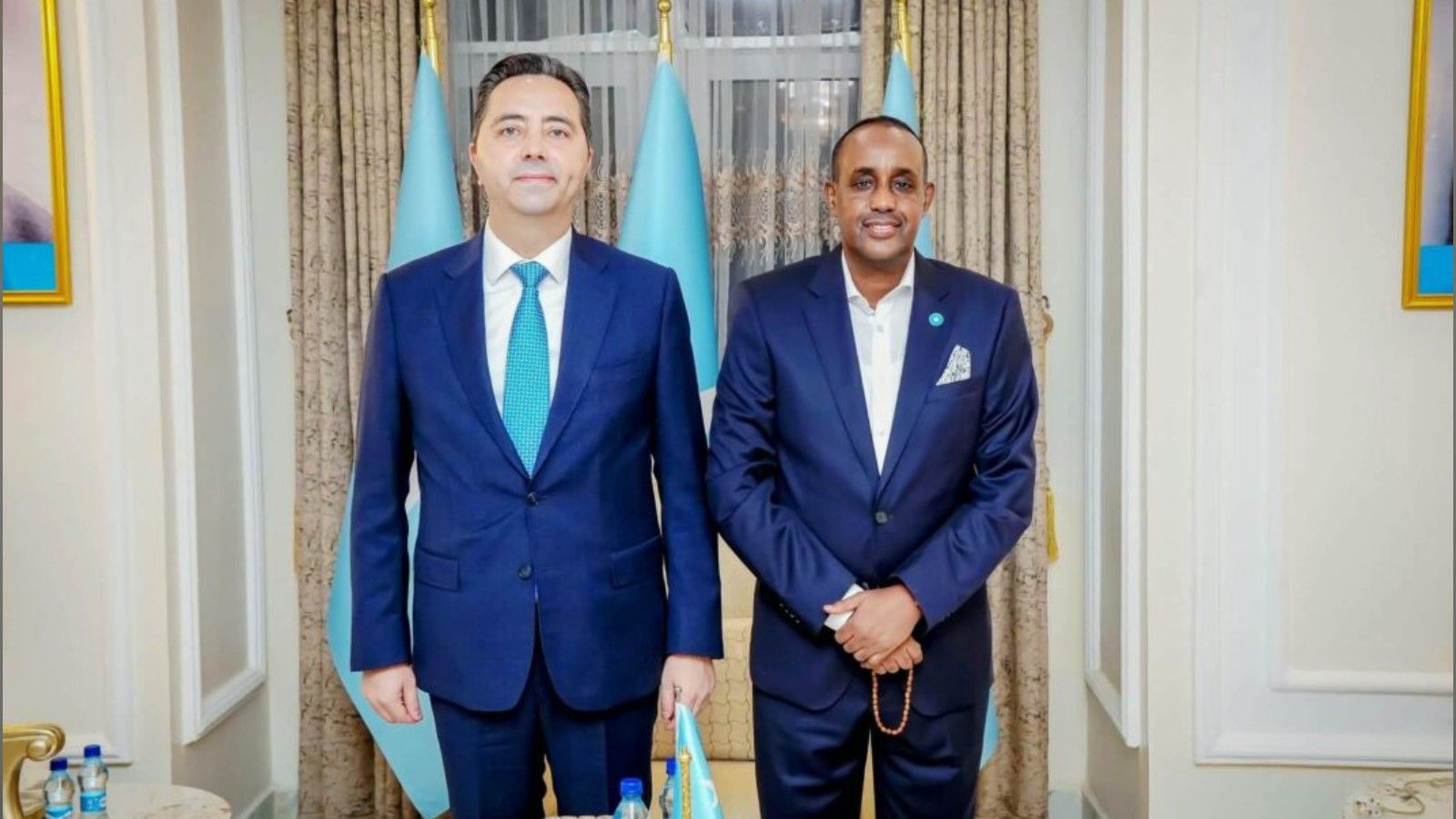
The shift is visible in how Ankara is now dealing with the opposition. In recent days, Turkey's ambassador to Somalia held a series of meetings with opposition leaders, a group that includes former presidents and former prime ministers. According to our reporting, the ambassador told them that Turkey is neutral in Somalia's political affairs and does not take sides between the government and its opponents.
A change of tone
The message matters because of what came before it. For a long time, opposition figures accused Turkey of backing Hassan Sheikh's political agenda without question. They argued that Ankara's closeness to the president's camp left it deaf to Somali concerns about the electoral process and the legitimacy of the current term. That criticism shaped how many in the opposition viewed Turkey.
That posture now appears to be changing. An ambassador who sits down with former presidents and former prime ministers, and tells them his country stands apart from the political contest, is not behaving like the representative of a government that has picked a side. Whether this is a permanent policy or a tactical adjustment is not yet clear.
Why Turkey's position carries weight
Turkey is not an ordinary diplomatic player in Somalia. Its agreements with Somalia are large and long-term, and its presence is felt in the country. A partner with that much invested has strong reasons not to be seen as the patron of one political camp, especially at a moment when the legitimacy of the leadership is openly contested.
This is our opinion, not an established fact: Turkey appears to have concluded that tying its interests too closely to one man is a risk. Agreements outlast individual officials. If the political order in Mogadishu changes, Ankara will still need to deal with whoever holds power, and it will want its relationships with all major Somali actors to remain intact.
What it means for the president
For Hassan Sheikh, a perception that Turkey is standing back is a political setback. International backing, and especially backing from a partner as visible as Turkey, has been an important source of confidence for any Somali government. If that backing becomes conditional or merely neutral, the president's room to dismiss the opposition's demands narrows.
For the opposition, the meetings with the Turkish ambassador are a diplomatic gain. They suggest that its arguments are being heard, and that a key foreign capital no longer treats it as a marginal force. The opposition should be careful not to overstate this. Neutrality is not an endorsement of its position, and it does not mean Turkey will push anyone to the table.
What to watch
Three questions will show how serious this shift is. First, will Turkey repeat its neutral position publicly, or only in private meetings? Second, will its day-to-day dealings with the government change in practice, or will cooperation continue as before? Third, will Ankara use its access to both sides to encourage a negotiated settlement of the electoral dispute?
If Turkey truly wants to be neutral, the most constructive thing it can do is use the trust it is now rebuilding with the opposition to help bring the sides together. Somalia has seen enough outside actors who treated its politics as a contest to be won by one faction. A genuinely even-handed Turkey could help make a real settlement possible.
For now, the facts are limited. The ambassador met opposition leaders and told them Turkey is neutral. The conclusion that this signals a break with Hassan Sheikh is our reading of events. But it is a reading that deserves attention, because in Somali politics, the stance of a major partner can change the balance long before anything is announced publicly.