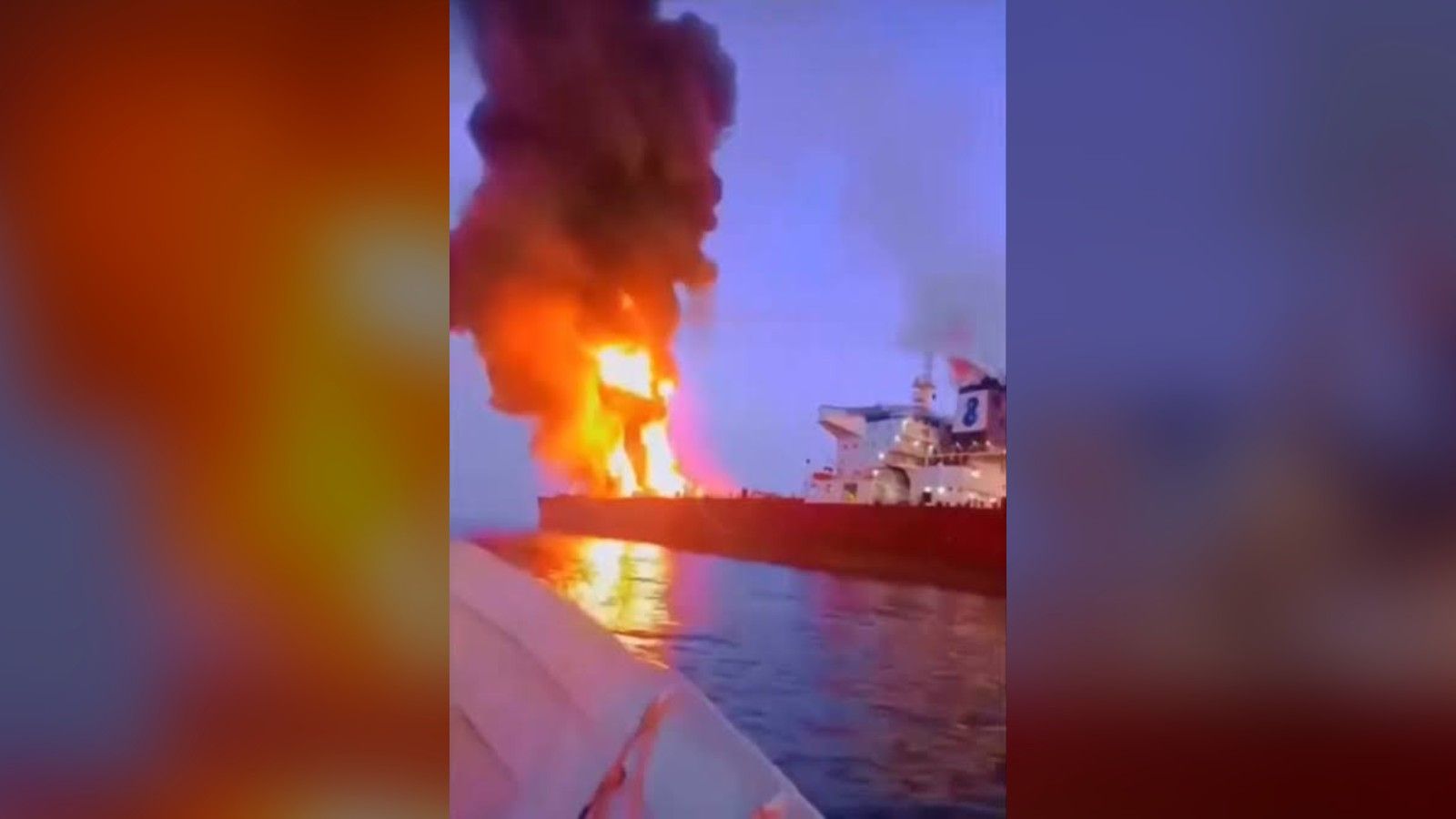
Photo: Ladnaan Media
An oil tanker heading out of the Strait of Hormuz was struck on its stern by an unknown projectile, about 11 nautical miles north of Khasab in Oman, according to the UK Maritime Trade Operations (UKMTO) centre.
"A tanker transiting outbound in the Strait of Hormuz has been hit on the stern by an unknown projectile," UKMTO said in a statement. The agency said no casualties have been reported, and that the environmental impact of the incident has not been confirmed.
That is the full extent of what is publicly established at this stage. It is a short statement, but it concerns one of the most sensitive stretches of water in the world.
What we know and what we do not
We know the approximate location, the direction the vessel was travelling, and the part of the ship that was hit. We know that, so far, no one is reported hurt.
We do not know who fired the projectile, or what kind of weapon or object it was. The name, flag and owner of the tanker, its cargo, and the extent of the damage have not been made public in the information available to us. Whether any oil has leaked is also unconfirmed, as UKMTO itself noted. Until the authorities or the ship's operators say more, any claim about who is responsible is speculation.
Separate claims have also circulated that mines are present in the waterway and that a Saudi-led coalition has been striking Houthi targets in Yemen. Ladnaan Media has not verified either claim, and nothing in the UKMTO statement links them to this incident.
Why Hormuz matters
The Strait of Hormuz is a narrow passage linking the Gulf to the open sea, and a large share of the world's seaborne oil exports passes through it. Because the channel is so tight and so heavily used, even a single incident can unsettle shipping companies, insurers and energy markets. Crews and operators will now be watching closely for further incidents and for guidance from maritime authorities.
The first hours after an attack at sea are usually filled with rumour and quick accusations. Governments, armed groups and commentators often rush to assign blame before any evidence has been examined. That is dangerous in a waterway where a misjudgment can escalate tensions between states that are already wary of each other.
The responsible course is to wait for a proper investigation. The tanker, its crew and the evidence of the strike should be examined openly, and the findings should be shared with the public. Seafarers, who have no part in the political disputes of the region, must not become targets, and the safety of commercial shipping should be treated as a shared interest of every country that depends on it.