Photo: Ladnaan Media
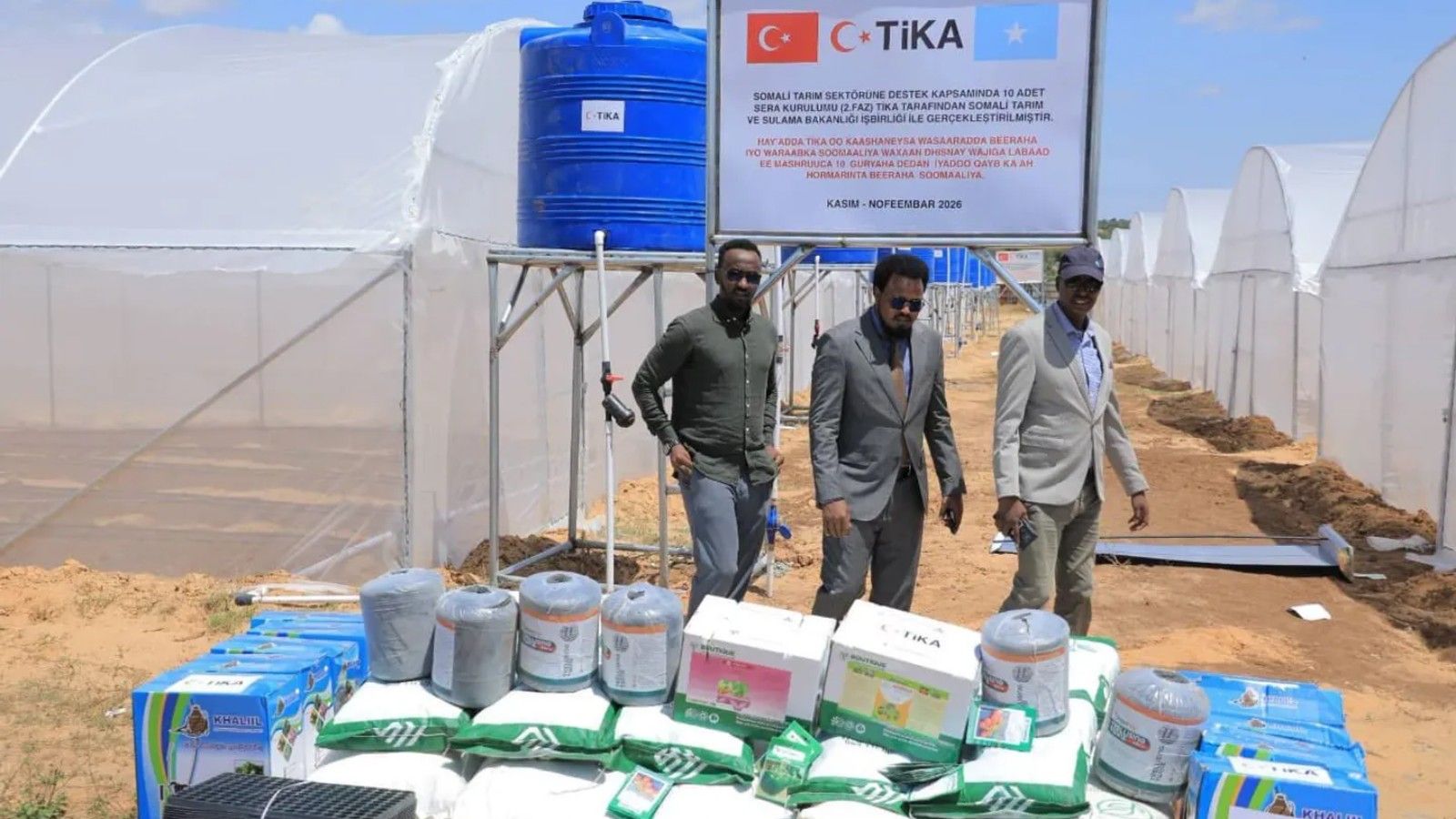
The Turkish Cooperation and Coordination Agency (TİKA) on Sunday, 15 November, handed over 10 greenhouses to Somalia's Ministry of Agriculture and Irrigation. The handover is part of a support package aimed at strengthening food security in the country.
Alongside the greenhouses, the ministry received irrigation systems and farming inputs. Together, the equipment is meant to help Somalia's farming sector produce more reliably.
The information available to Ladnaan Media does not yet say where the greenhouses will be installed, how many irrigation systems were supplied, or which inputs were included. Those details matter, and we will update this report when the ministry or TİKA provides them.
Why greenhouses matter
A greenhouse gives a farmer something that open-field farming in much of Somalia cannot offer: control. Inside a protected structure, growers can manage water use more precisely and shield crops from harsh sun, strong wind and some pests. In many cases they can also grow vegetables and other high-value crops over a longer part of the year. Somali farmers have long faced erratic rainfall, recurring drought and sudden flooding, so that kind of control is valuable.
Irrigation systems address the same weakness from another angle. Farming that depends only on rain is exposed every time the rains fail. Reliable irrigation, used efficiently, allows a farm to keep producing through dry spells and to use scarce water more carefully.
Food security and the wider picture
Food security is one of Somalia's most persistent national challenges. Drought, flooding, conflict and high food prices have repeatedly left families struggling to feed themselves, and the country has long relied on imported staples. Any support that helps local production deserves attention, even when it is modest in scale.
Ten greenhouses will not change that picture on their own, and it would be a mistake to present them as if they could. But equipment that helps farmers grow food closer to home is a practical contribution, and it is more useful than many headline announcements that never reach a farm.
The real test of any handover comes after the ceremony.
The questions that follow
In this newsroom's view, the real test of any handover comes after the ceremony. Equipment only becomes food security when it is in the hands of people who know how to use it and can keep it running. Several questions are worth putting to the ministry.
Who will operate the greenhouses: the ministry itself, farming cooperatives or individual farmers? Will training be provided, and by whom? Who will pay for maintenance, water supply and replacement parts once the initial support ends? And how will the produce reach markets at prices that ordinary households can afford?
Greenhouses that sit idle for lack of water, spare parts or technical know-how would be a loss for everyone involved, including the donor. Done well, the same facilities could serve as demonstration sites where farmers learn techniques they can then copy on their own land.
TİKA has worked in Somalia across a range of sectors, and agriculture is an area where steady, well-managed support can make a visible difference. The ministry now carries the responsibility of turning this equipment into harvests, and of being open with the public about where it went and what it produced.
Ladnaan Media will follow the story and report further details on the locations, the beneficiaries and the results as they become available.