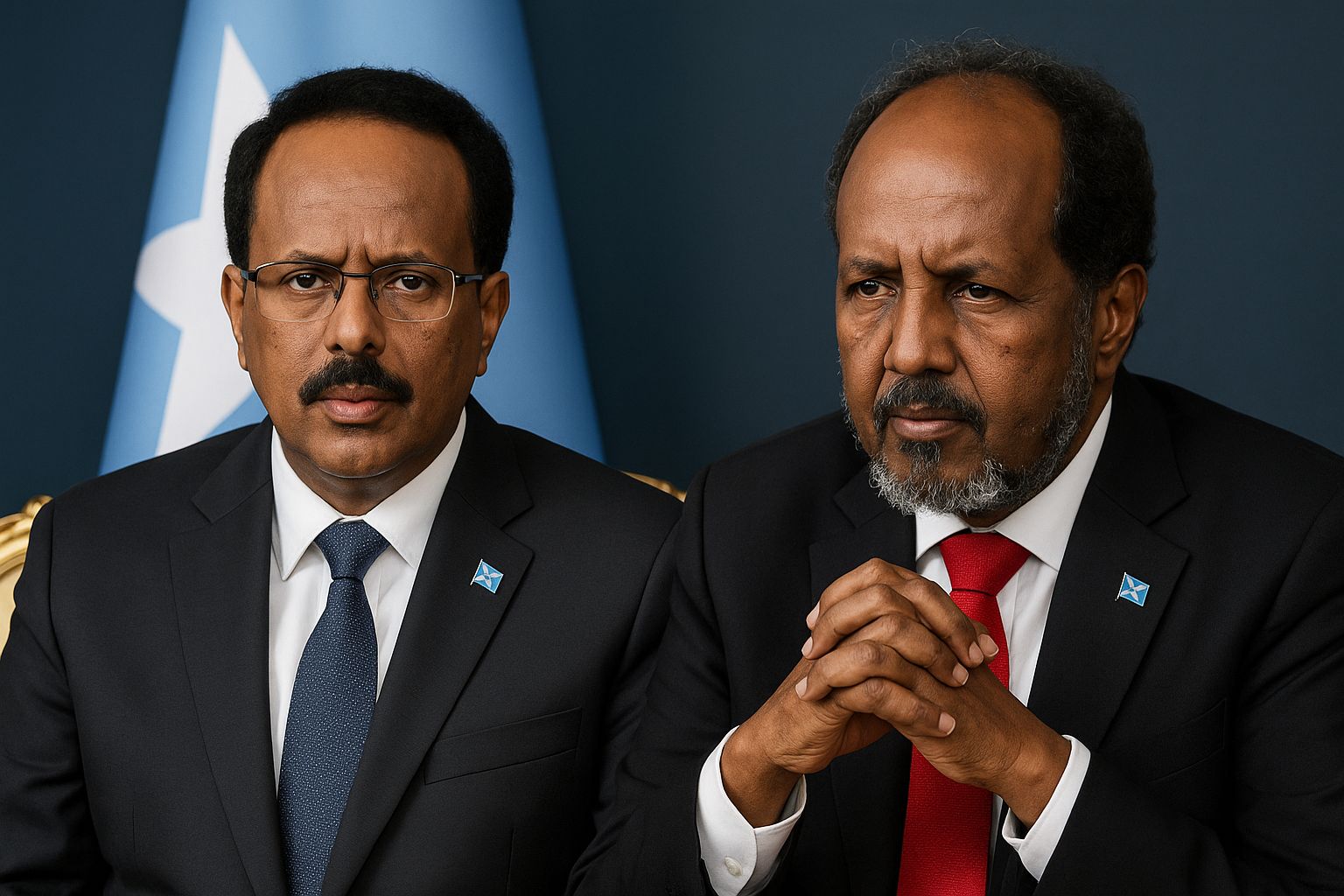
Photo: Ladnaan Media archive
By any measure, Somalia stands today at a critical junction. The question confronting citizens, lawmakers, and the international community alike is simple but profound: how did President Hassan Sheikh Mohamud manage to consolidate such vast power, when his predecessor—despite a far stronger record on governance and institutional reform—was harshly judged for far less?
The answer lies not only in political maneuvering but also in the gradual corrosion of Somalia’s fragile constitutional order—an erosion that threatens to undo the modest gains of the last decade.
From Consensus to Control
When President Hassan Sheikh returned to office in 2022, many hoped his experience would translate into a more inclusive, reform-driven leadership. Instead, critics argue, his second tenure has been marked by concentration of power, suppression of dissent, and politicization of state institutions.
Over the past three years, key constitutional checks and balances have been systematically weakened. Parliament has been sidelined in major national decisions; judicial independence has eroded; and the federal system—enshrined in Somalia’s Provisional Constitution—has been undermined through unilateral decrees and selective budgetary control over regional states.
Even more concerning are efforts to reshape the constitution not through consensus but through coercion, allegedly to pave the way for indefinite re-election under the guise of “political stability.”
Corruption and Displacement: The Cost of Impunity
Allegations of widespread corruption, public land seizures, and forced displacements have become defining features of this administration. Reports from civil society and displaced communities suggest that land in and around Mogadishu has been expropriated for political patronage or commercial gain, leaving families uprooted and justice out of reach.
Instead of addressing these grievances, the government has often responded with intimidation and denial—creating a deep sense of disillusionment among citizens who once believed in reform.
Fragmenting the Nation
Rather than uniting the country’s federal member states around shared goals, Mogadishu’s current leadership has presided over deepening divisions—pitting regions against one another and weaponizing resources to reward loyalty and punish dissent.
This divisive approach has not only stalled federalism but also weakened Somalia’s ability to confront insurgency. By prioritizing political survival over national cohesion, the government has created fertile ground for extremist groups to exploit public frustration and mistrust.
Foreign Policy in Disarray
Somalia’s foreign relations—once guided by consensus and quiet diplomacy—have increasingly reflected domestic political calculations. The country’s strained ties with neighbors and erratic regional posture have diminished its credibility at a time when cooperative diplomacy is vital for security, trade, and maritime sovereignty.
Observers note that foreign policy has become a tool of personal consolidation, not national strategy—alienating traditional allies while inviting unnecessary confrontation.
The Need for Leadership Anchored in the Rule of Law
Somalia does not lack talent, vision, or courage among its people. What it lacks—painfully and persistently—is leadership that respects institutions, law, and accountability.
The future of Somalia will depend not on who holds power, but how power is exercised and constrained. The rule of law must once again become the foundation of governance—not a slogan, but a living principle.
Rebuilding trust requires more than promises of reform. It demands a return to constitutionalism, genuine dialogue with the regions, transparent governance, and a clear separation between the state and the ruling elite’s private interests.
A Nation’s Call
Somalis have endured decades of hardship, yet they continue to hope—for justice, stability, and dignity under a government that serves rather than rules them. The lesson of the past few years is clear: unchecked power, however well-intentioned it may seem, leads inevitably to decay.
If Somalia is to move forward, its leaders must remember that legitimacy is not earned through force, fear, or manipulation—but through fidelity to the rule of law and the will of the people.