Photo: Ladnaan Media
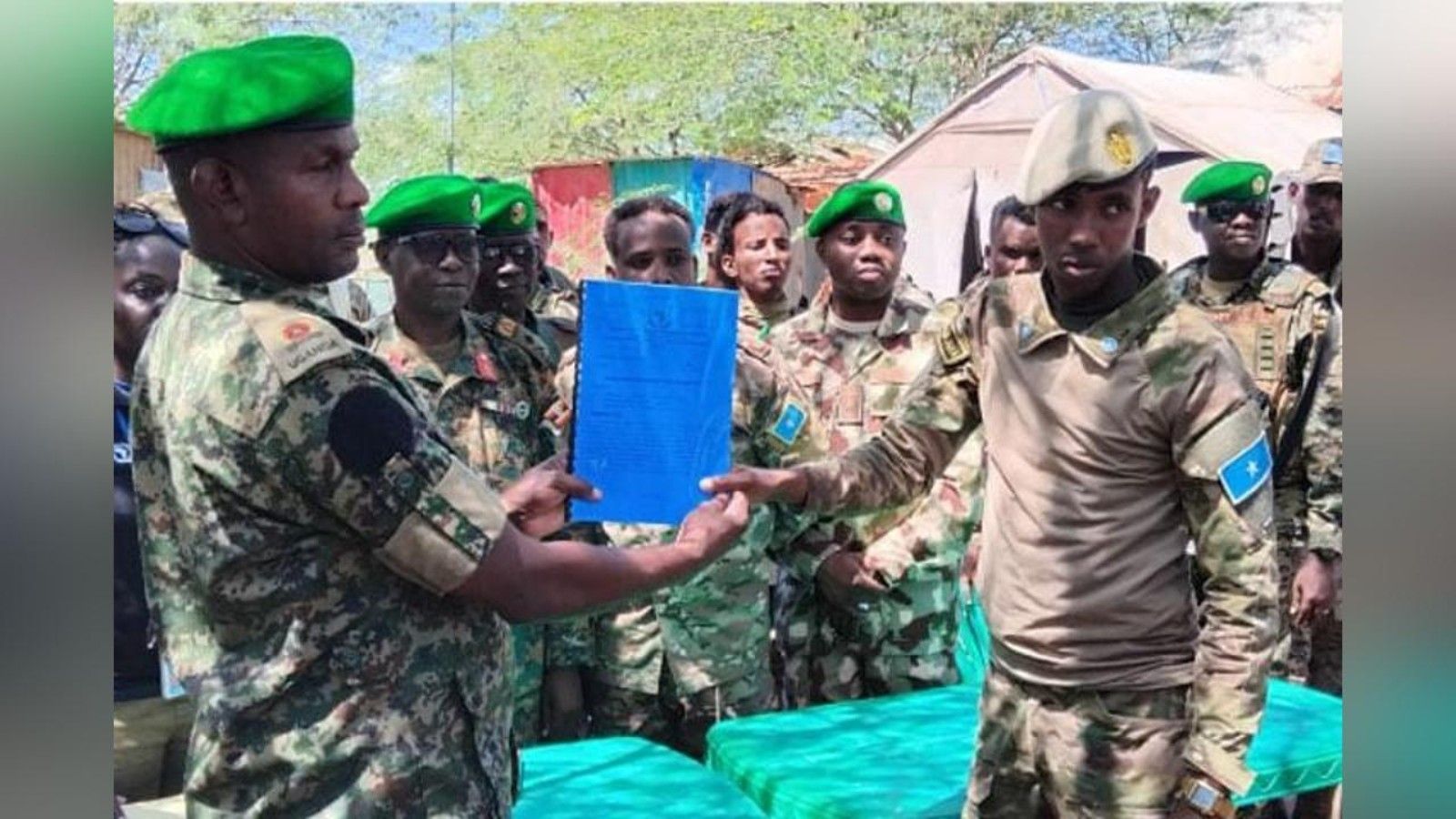
The Somali National Army has taken over five military bases around Baraawe, in Lower Shabelle region, that had until now been run by Ugandan troops serving under the African Union Support and Stabilization Mission in Somalia (AUSSOM).
The positions handed over are the Empresso base, Baraawe Knoll, the Kismayo Road position, Baraawe Port and the Qoryooley Road position. All five are in or close to the coastal town, one of the important towns on Somalia's southern coast.
Colonel Mohamed Ahmed Abdi, commander of the army's 23rd Division, attended the ceremony and oversaw the transfer of the positions from the Ugandan contingent to Somali forces. The handover comes as Ugandan forces conclude their deployment in the area.
What changes on the ground
From now on, the job of holding these positions falls to Somali soldiers rather than to foreign troops. Ugandan soldiers have been part of African Union missions in Somalia for years and have taken part in operations against Al-Shabaab in several regions of the country.
The location of the five bases is what makes this handover significant. Taken together, they cover the main approaches to Baraawe: the road towards Kismayo, the road towards Qoryooley, and the port area on the coast. Whoever controls these points largely controls who and what moves in and out of the town.
The handover is part of the wider process of moving security responsibility from African Union forces to Somalia's own national forces.
Our view
The following is the opinion of Ladnaan Media's editor.
It is right in principle that Somali soldiers should hold Somali towns. No country can rely on foreign troops indefinitely, and every handover like this one is a test of whether Somalia's own forces are ready to carry the load. Taking over the bases is the easy part. A flag-raising and a signed handover are one day's work. Holding the ground is a task that never ends.
The real danger in any transition is the gap that opens in the days and weeks after one force leaves and another settles in. Armed groups watch for exactly that moment. Roads, ports and checkpoints are the places where a weak or thinly manned position gets exposed first. If the army does not keep these five positions fully manned, supplied and alert, the handover could turn from an achievement into a liability.
Taking over a base is one day's work. Holding it is a task that never ends.
The people of Baraawe and the surrounding villages will judge this change by simple things: whether the roads stay open, whether the port stays secure, and whether they feel safer or less safe than before. Those are the standards the army and the government should expect to be held to.
The long-term success of the transition will depend on three things: the army's ability to keep a steady presence at these positions, to protect the key infrastructure around them, and to respond quickly and effectively to any threat in Lower Shabelle. The authorities owe the public clear answers on how the positions will be staffed and sustained, and Ladnaan Media will keep following the story.